
The oldest form of Printing…
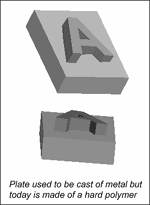
Ink is applied to the top surface of the raised image area. This in turn is pressed against the substrate to transfer the image. From the 15 th century until the mid 1940’s, metal type was the only means for converting reading matter into standard type faces for printing.
Photographic typesetting and computerized composition developed in the 1960’s has almost completely displaced metal linecasting and led to the decline of letterpress, as we know it today.
Ink fountain (reservoir) feed to a fountain roller which is wiped with a fountain blade to reduce film thickness and vary ink flow across the width. The ductor roller transfers ink to the main ink system where the thin ink film that is needed for printing is transferred to the substrate.
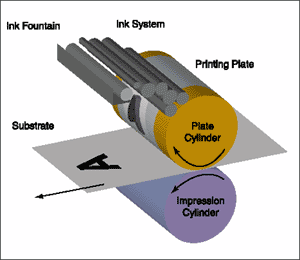
Inks used are thick in body, much like lithographic (offset) inks.
The majority of printing done today by the letterpress process includes newspapers, labels and books; however, the process is a slowly dying one as other better printing methods such as Offset and Flexography take over it.